

01 / Target prioritization
Learning from
55,984 clinical trials.
A retrospective analysis links the cell-type specificity of drug targets with clinical progression and adverse-event rates.
AI for therapeutic discovery
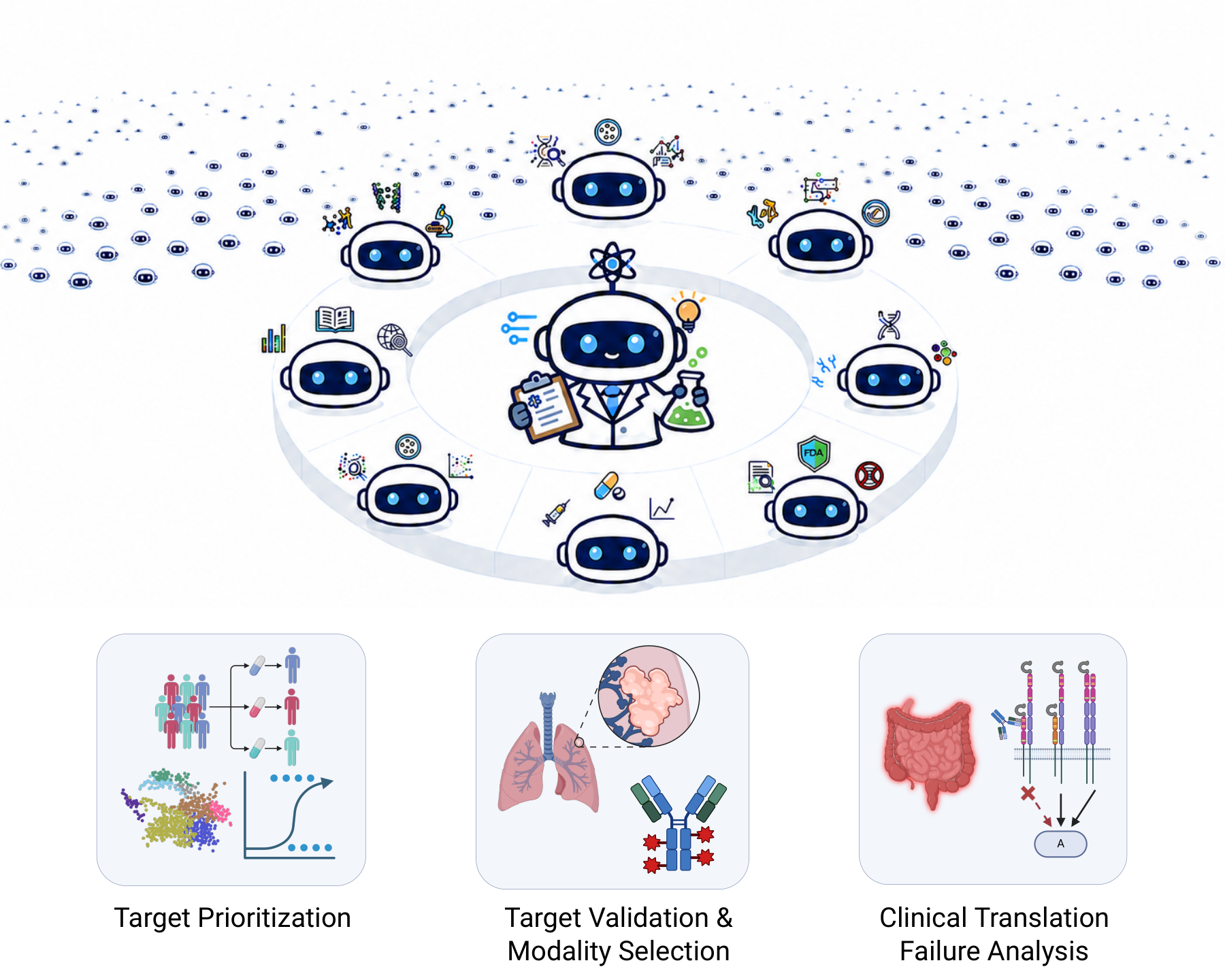
A multi-agent AI framework for therapeutic discovery and development.
An organization of specialized AI scientists that retrieves, analyzes, and integrates biomedical evidence to support research decisions across therapeutic development.
Inside the framework
A virtual Chief Scientific Officer defines the research scope with the user, delegates analyses to specialist agents, and synthesizes their findings. A scientific reviewer evaluates methods and claims, guiding further analysis when evidence is incomplete.
Therapeutic development depends on evidence across biological scales, yet the relevant data, analytical tools, and expertise remain fragmented. Integrating these sources and assessing conflicting results is a persistent challenge. The Virtual Biotech organizes specialist analyses within a shared research workflow, with scientific review and traceable evidence to support transparent assessments.
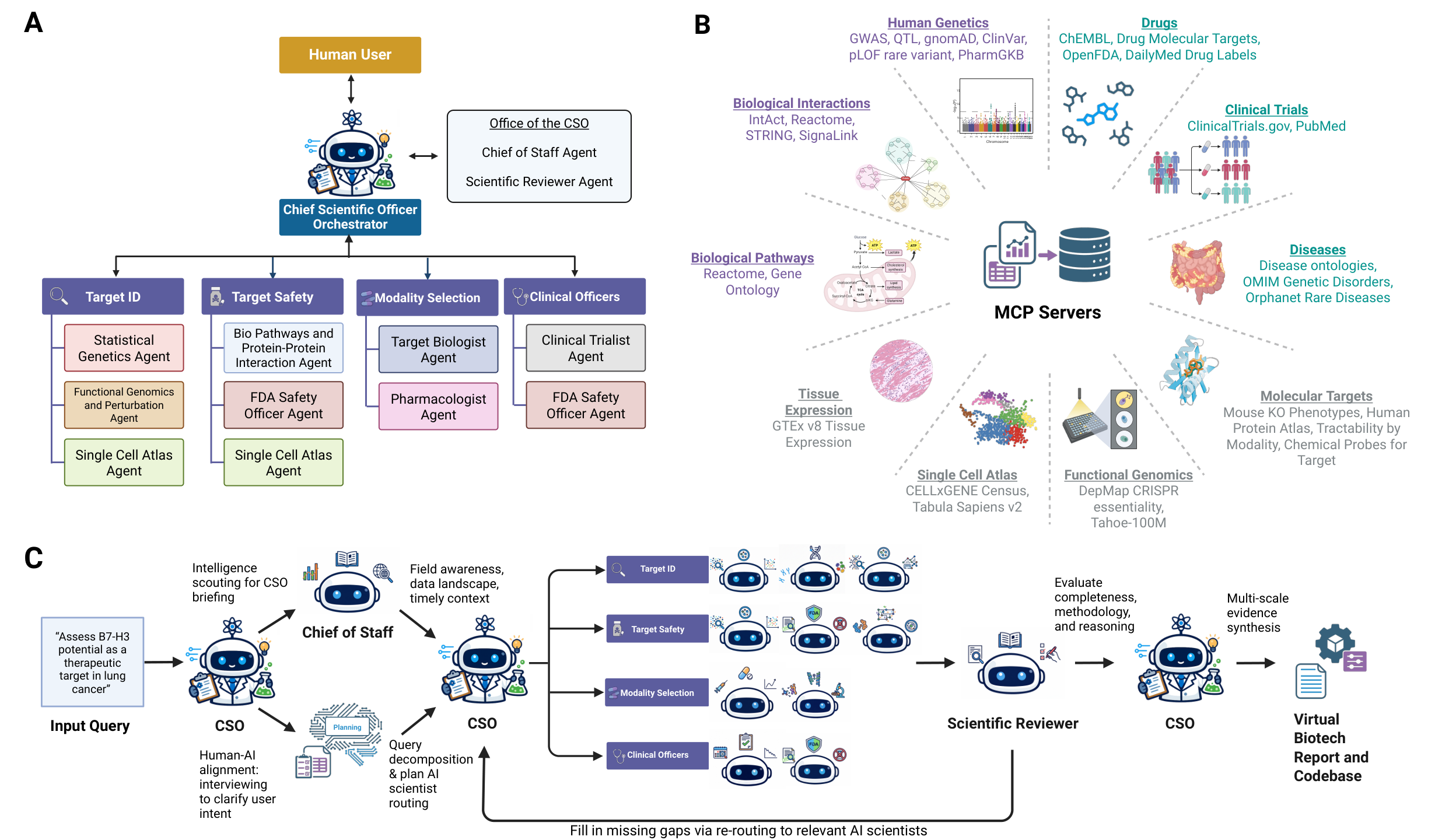
A Scientific organization
A virtual Chief Scientific Officer coordinates scientific divisions and specialist agents.
B Tools and data
Domain-specific tools query and analyze biological and clinical data.
C Research workflow
The CSO clarifies the question, coordinates analysis and scientific review, then refines the work or synthesizes a report.
From framework to discovery
01 / Target prioritization
A retrospective analysis links the cell-type specificity of drug targets with clinical progression and adverse-event rates.
02 / Target & modality
Genetic, single-cell, spatial, and clinical evidence informs a proposed antibody–drug conjugate strategy, with a focus on the tumor microenvironment.
03 / Clinical translation
An analysis of the vixarelimab trial in ulcerative colitis explores signaling redundancy as a possible explanation for limited efficacy and evaluates a broader gp130-axis biomarker.
The Virtual Biotech supports early-stage therapeutic research. Its analyses generate hypotheses that require further testing and validation.
Harrison G. Zhang et al. The Virtual Biotech: A multi-agent AI framework for therapeutic discovery and development. Science, eaeg6779 (2026). DOI: 10.1126/science.aeg6779.
Interactive workspace
Formulate a question about a target, disease, or therapeutic strategy. Work with the virtual CSO to define the scope, follow specialist analyses, and examine the evidence supporting the conclusions.
“What is the evidence for B7-H3 as a therapeutic target in lung cancer?”
Your research history is private to your account.
Your research workspace
Continue with your email to begin or return to your research.